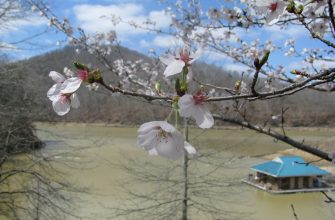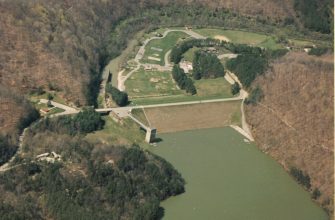

Lake Cumberland winds through south-central Kentucky behind Wolf Creek Dam. It covers 50,250 acres at the top of its power pool, with deep river channels and coves that draw anglers and houseboat crews. This is the lake known as the “Houseboating Capital of the World”, with marinas around Jamestown, Somerset and Burnside.
This guide covers Lake Cumberland top to bottom: the famous striper fishing and the world-class trout tailwater below the dam, the houseboat-and-marina scene, where to swim and camp, the Wolf Creek Dam story, and how to plan a trip. It’s part of our growing Kentucky Lakes Database.
- Lake Cumberland at a glance
- How deep is Lake Cumberland?
- Wolf Creek Dam and the making of the lake
- Fishing Lake Cumberland
- The trout tailwater below the dam
- Houseboating capital of the world
- Marinas, boating and watersports
- Swimming, state parks and camping
- Water level and lake conditions
- Getting there and what’s nearby
- Know before you go
- Frequently asked questions
- How big is Lake Cumberland?
- What fish are in Lake Cumberland?
- Why is Lake Cumberland called the houseboating capital of the world?
- Can you swim in Lake Cumberland?
- What is the water level at Lake Cumberland right now?
- Where can you stay at Lake Cumberland?
- Is the Wolf Creek Dam safe?
- How far is Lake Cumberland from Lexington and Nashville?
Lake Cumberland at a glance
- Surface area: 50,250 acres at elevation 723 feet above mean sea level; larger during flood storage
- Shoreline: 1,255 miles at the top of the flood-control pool, elevation 760 feet (USACE)
- Maximum depth: about 200 feet (61 m) in the old river channel near Wolf Creek Dam; varies with water level
- Length: 101 river miles at the top of the flood-control pool (USACE)
- Location: Russell, Pulaski, Wayne, Clinton, McCreary & Laurel counties, south-central Kentucky
- Built: Wolf Creek Dam on the Cumberland River, completed 1950 (U.S. Army Corps of Engineers, Nashville District)
- Top fish: striped bass, largemouth/smallmouth/spotted bass, walleye, crappie, bluegill, catfish (trophy trout below the dam)
How deep is Lake Cumberland?
About 200 feet (61 m) in the old river channel near Wolf Creek Dam, according to Kentucky Fish and Wildlife. That is a depth below the water surface; the lake level changes with rainfall and dam releases.
The USACE water-control manual (December 1998, section 3.6.1) gives a mean summer depth of about 80 feet (24 m). This is a historical reservoir-wide average, not the maximum depth near Wolf Creek Dam or a current sounding.
For the statewide comparison, see our guide to Kentucky’s deepest lakes.
Wolf Creek Dam and the making of the lake
Lake Cumberland was born in 1950 when the Army Corps of Engineers finished Wolf Creek Dam, a 5,736-foot concrete-and-earth structure that plugged the Cumberland River for flood control and hydropower. The dam’s powerhouse still generates electricity, and the lake it created reshaped the region into a recreation destination. In the 2000s the Corps discovered serious seepage through the dam’s foundation, and from 2007 to 2013 it carried out a roughly $600-million repair – drilling a deep concrete barrier wall – while holding the lake at a lower level. The fix succeeded, the lake returned to full pool, and Wolf Creek is sound again. Below the dam, the cold water released from the lake’s depths feeds the Wolf Creek National Fish Hatchery and one of the South’s great trout rivers.
Fishing Lake Cumberland
Cumberland is a genuinely elite, multi-species fishery, and it fishes like several lakes in one:
- Striped bass are the headliners – Cumberland is the striper lake in Kentucky, with a stocked population that grows to trophy size chasing baitfish in the open water. Trollers and live-bait anglers chase them deep in summer and up top in spring and fall.
- Largemouth, smallmouth and spotted bass all share the rocky banks, points and coves; the clear water and deep structure suit smallmouth especially.
- Walleye are a Cumberland specialty – the lake has a strong, stocked walleye fishery, best in the upper river and around the river channel.
- Crappie, bluegill and catfish round out the menu – crappie on the brush and bridges, big catfish in the deep channels.
The trout tailwater below the dam
Don’t overlook the Cumberland River tailwater below Wolf Creek Dam – the cold, oxygenated water released from the lake’s depths supports a world-class brown and rainbow trout fishery stretching for miles downstream, supported by the Wolf Creek hatchery. It’s one of the best trophy-trout rivers in the eastern U.S. A Kentucky fishing license is required everywhere; check current creel and size limits (and the trout regulations on the tailwater) before you keep fish.
Houseboating capital of the world
More than any single thing, Lake Cumberland is famous for houseboats. The deep, sprawling lake and its sheltered coves are perfect for them, and the region around Jamestown and Somerset became the heart of the American houseboat-building industry. Today you can rent a fully-loaded houseboat – some pushing 90 feet, with hot tubs, water slides and rooftop decks – from the lake’s big marinas and disappear into the coves for a week. It’s the quintessential Cumberland vacation, and it’s why the lake calls itself the houseboating capital of the world.
Marinas, boating and watersports
A ring of full-service marinas serves the lake – among them State Dock (at Lake Cumberland State Resort Park), Lee’s Ford, Jamestown, Conley Bottom, Grider Hill, Alligator and Wolf Creek – offering houseboat and powerboat rentals, slips, fuel, ships’ stores and on-the-water dining. Beyond houseboating, Cumberland is a powerhouse for wakeboarding, water-skiing, tubing, personal watercraft, sailing and scuba diving in the clear water; the steep, rocky shoreline and deep coves are also popular (if at-your-own-risk) for cliff jumping. With this much water, even a busy holiday weekend rarely feels crowded once you’re up a cove.
Swimming, state parks and camping
The shoreline is dotted with public recreation. Lake Cumberland State Resort Park near Jamestown is the hub – a lodge (Lure Lodge), cottages, a campground, an indoor/outdoor pool complex and the State Dock marina. General Burnside State Park sits on an island in the lake near Somerset, with a campground and golf, and the Corps of Engineers and Daniel Boone National Forest run additional campgrounds and day-use areas around the lake. Swimming is popular off beaches, boats and marinas – there are no lifeguards, so wear a life jacket and watch the kids in the deep, clear water.
Water level and lake conditions
Summer pool is an elevation, not a depth. The top of the power pool is 723 feet (220.4 m) above mean sea level. USACE’s reservoir figures distinguish this from the 760-foot (231.6 m) flood-control pool.
USACE lists 50,250 acres at the top of the power pool, elevation 723 feet above mean sea level. At the higher flood-control pool, elevation 760 feet, it lists 63,530 acres. The lake gets larger or smaller as the water rises or falls. The 1,255-mile shoreline figure also refers to the higher flood-control pool.
The reading changes daily. See the USACE Lake Cumberland water-level report and check its observation time. A reading in feet above mean sea level describes the height of the surface, not the depth beneath your boat. Rainfall, flood storage and releases for hydropower all affect the lake. Before launching, check ramp and marina conditions as well as the gauge. Releases also change flows in the Cumberland River below the dam.
Getting there and what’s nearby
Lake Cumberland is in south-central Kentucky, roughly 1 hour south of Lexington, 2.5 hours from Louisville, Nashville, Knoxville and Cincinnati, reached via I-75 (to Somerset) or the Cumberland Parkway. The towns of Somerset, Jamestown, Russell Springs and Burnside serve the lake. Nearby, the spectacular Cumberland Falls State Resort Park – the “Niagara of the South,” famous for its rare nighttime “moonbow” – is a must-see day trip, and the Daniel Boone National Forest wraps much of the region.
Know before you go
- Fishing license: a Kentucky license is required; note the special trout regulations on the tailwater below Wolf Creek Dam.
- Houseboats book early: summer weeks at the marinas fill months ahead – reserve well in advance.
- Deep, cold, clear water: no lifeguards; wear a life jacket, and be cautious of cold deep water and boat traffic.
- Tailwater safety: the river below the dam rises fast when the dam generates – heed warning horns and gauges.
- Water level: check the current Corps lake level before launching, especially outside summer pool.
- Best seasons: late spring through early fall for houseboating, swimming and watersports; spring and fall for the best fishing; the tailwater trout fish year-round.
Frequently asked questions
How big is Lake Cumberland?
USACE lists 50,250 acres at the top of the power pool, elevation 723 feet above mean sea level. At the higher flood-control pool, elevation 760 feet, it lists 63,530 acres. The lake gets larger or smaller as the water rises or falls.
What fish are in Lake Cumberland?
Striped bass (the headliner), largemouth, smallmouth and spotted bass, walleye, crappie, bluegill and catfish. The Cumberland River tailwater below Wolf Creek Dam is a world-class brown and rainbow trout fishery.
Why is Lake Cumberland called the houseboating capital of the world?
Its deep water and sheltered coves are ideal for houseboats, and the region around Jamestown and Somerset became the center of the U.S. houseboat-building industry. Today you can rent large luxury houseboats from the lake’s marinas.
Can you swim in Lake Cumberland?
Yes – swimming is popular off beaches, boats and the marinas, and the state resort park has pools. There are no lifeguards, so wear a life jacket in the deep, clear water.
What is the water level at Lake Cumberland right now?
The reading changes daily. See the USACE Lake Cumberland water-level report and check its observation time. A reading in feet above mean sea level describes the height of the surface, not the depth beneath your boat.
Where can you stay at Lake Cumberland?
Lake Cumberland State Resort Park (Lure Lodge, cottages and a campground) near Jamestown, General Burnside State Park near Somerset, Corps and national-forest campgrounds, and of course rental houseboats.
Is the Wolf Creek Dam safe?
Yes – the Corps of Engineers completed a major foundation-seepage repair (2007-2013), and the dam has returned to full operation and full pool.
How far is Lake Cumberland from Lexington and Nashville?
About an hour south of Lexington and roughly 2.5 hours from Nashville (and from Louisville, Knoxville and Cincinnati).
Related: explore more of the largest lakes in Kentucky, or head back to the Kentucky Lakes Database.
Explore more Kentucky lakes: the largest lakes in Kentucky and the deepest lakes in Kentucky.